Two cards, two different jobs
Wedding stationery vocabulary trips everyone up once. The distinction is simple:
- Escort card — picked up at the entrance, tells the guest which table to go to. Name + table number. Displayed alphabetically so a hundred guests can scan it fast.
- Place card — already waiting at the table, marks the exact seat. Usually just the name; a meal-code icon goes here if the caterer needs it.
An escort card answers "where am I going?"; a place card answers "which seat is mine?". One lives at the door, the other lives at the plate.
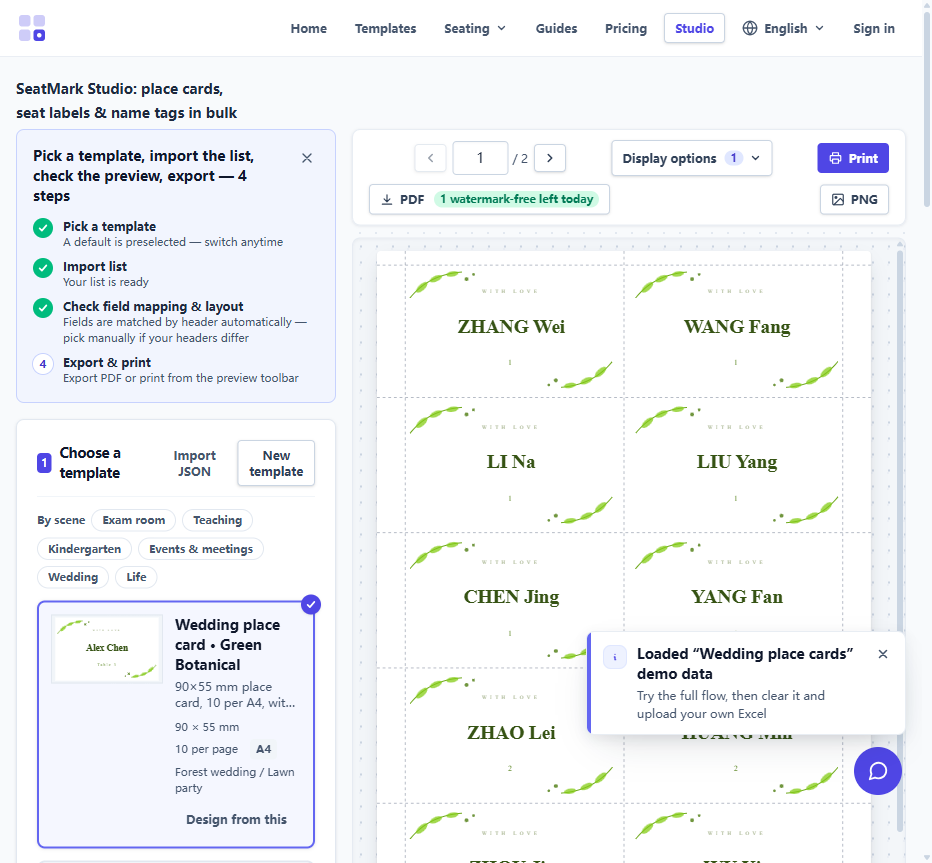
Which combination do you need?
Escort cards only covers most weddings — guests find their table and pick any seat at it. Escort + place cards when seats are assigned individually (plated dinner, head table, strict protocol). Seating chart + place cards replaces the card wall with a board — increasingly popular because it prints as one sheet and looks striking.
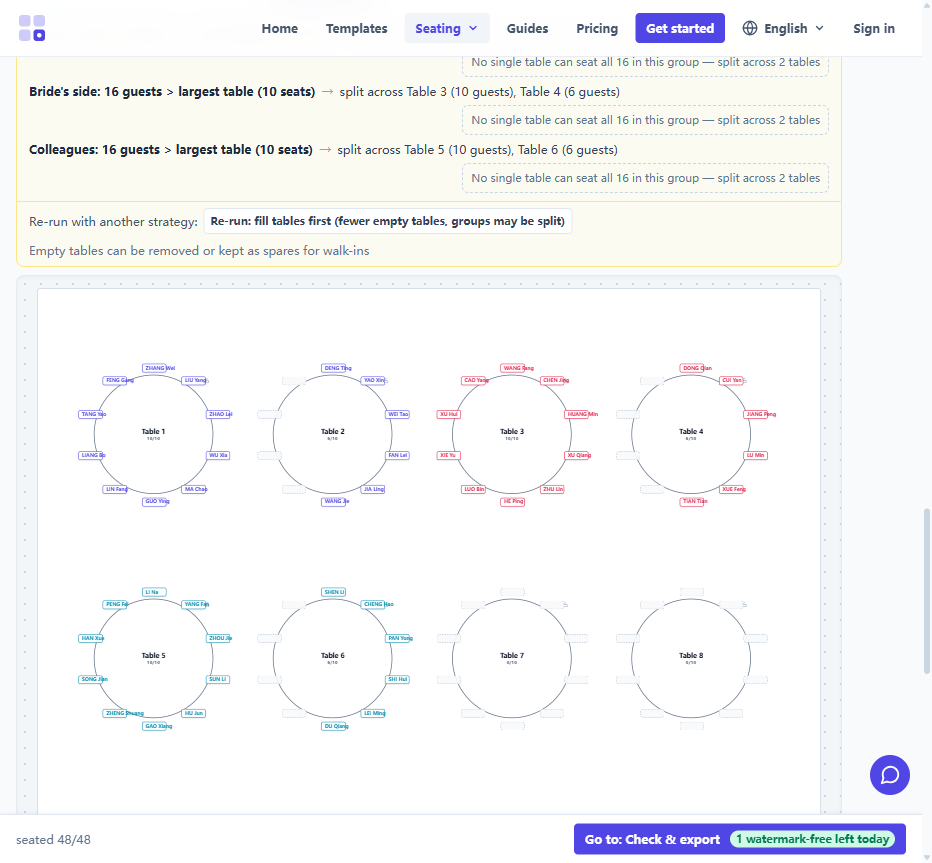
Printing both from one list
The practical win: both card types run off the same spreadsheet. One roster with name and table columns produces escort cards (name + number), place cards (name only), the seating chart, and even matching table numbers — four outputs, one source of truth. When the RSVP list shifts the night before, you re-print the changed pages, not a wall of stationery.
Escort card logistics
- Alphabetical, not by table. Guests look themselves up by name — grouping cards by table number at the entrance makes everyone hunt twice.
- Plus-ones and couples. One card per person is the formal standard; "Mr & Mrs" joint cards are acceptable and halve the print run.
- Last-minute adds. Keep blank cards and the same template handy — a hand-lettered spare on matching card stock passes unnoticed.