The last piece of the table
Place cards tell guests where to sit; table numbers tell them which table is theirs. They do different jobs and they should look like they belong together — same fonts, same motif, same paper. Printing them from the same tool is the easiest way to guarantee that.
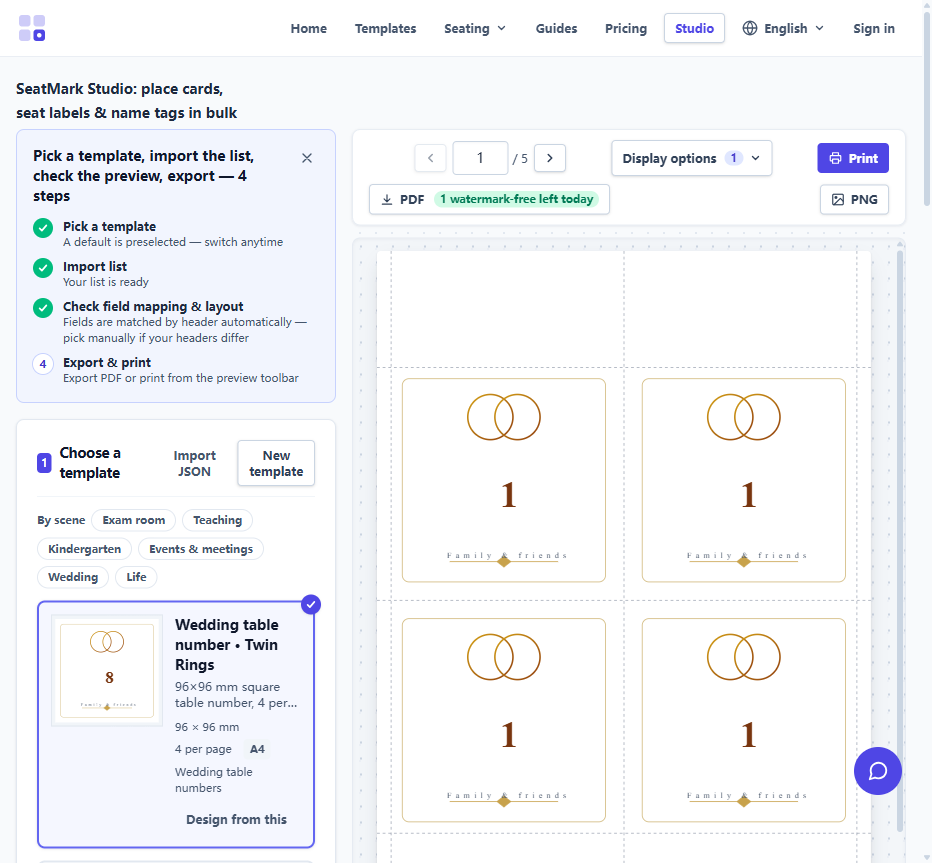
Choose flat or fold-over
Flat number cards slide into holders, frames or floral clips — a sturdier, more formal look, and the holder adds height so the number clears the centrepiece. Fold-over tents stand on their own, travel flat, and survive being set up by a venue team that has never seen your decor plan.
Numbers or names
Plain numerals are the default, but named tables (cities you have visited, favourite books, shared jokes) are a classic personalisation — just paste the names as the list. Whatever you choose, print two spares: a table number always goes missing between the venue walkthrough and the reception.
Sizing for real rooms
In a banquet hall the number must be findable from several metres away — a half-page card or a roughly 10 cm square with a large numeral is the practical minimum. For a dinner at home, a place-card-sized number is plenty. The preview shows exactly how many cards fit per sheet.
Print it right
Print at 100% scale on 200 gsm or heavier card stock — lighter paper curls at the edges once cut. If the printed cut lines are a fraction off, run the one-time print calibration before doing the real run. And do not forget the matching seating chart for the entrance — the same guest list produces both.